


This national report examines the prevalence and burden of osteoporosis and fractures, identifies gaps in screening and care, and offers recommendations for healthcare systems, public health professionals and policymakers. It is the first national public health indicator report focused on osteoporosis, fractures, prevention, health equity and access to care in the United States.
Osteoporosis and low bone mass affect millions of Americans and contribute to more than 2 million fractures each year. The report brings together national data to illustrate the prevalence of these conditions, persistent gaps in diagnosis, and the growing clinical and economic burden of osteoporotic fractures.
Why This Matters
Osteoporotic fractures can lead to hospitalization, chronic pain, disability, loss of independence, and increased mortality. Yet many people at increased risk are not identified or treated before a fracture occurs, and many patients do not receive appropriate osteoporosis care following a fracture. Earlier identification of fracture risk, evidence-based treatment, falls prevention, and coordinated post-fracture care can reduce fracture risk and improve outcomes.
Key Findings
The report identifies significant gaps in osteoporosis screening, diagnosis, treatment and post-fracture care. It also documents disparities in access and outcomes and demonstrates the growing effect of osteoporotic fractures on individuals, healthcare systems and society.
More than half of adults aged 50 and older have low bone mass or osteoporosis
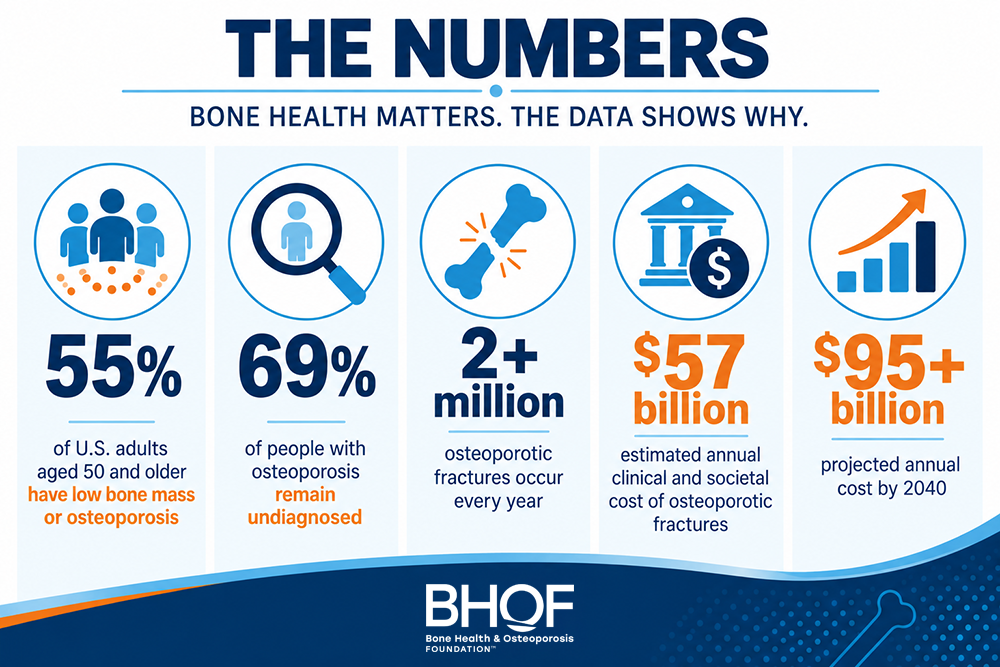
Approximately 55% of U.S. adults aged 50 and older have low bone mass or osteoporosis.
Most osteoporosis remains undiagnosed
Approximately 69% of people with osteoporosis remain undiagnosed. Among men with osteoporosis, that figure rises to nearly 87%.
Bone density screening remains underused
Screening rates remain low, including among people who meet age-based recommendations or have clinical risk factors for osteoporosis and fracture.
A fracture is a critical opportunity to intervene
Many patients do not receive osteoporosis evaluation or treatment following a fracture, despite their increased risk for another fracture.
Disparities affect access, care, and outcomes
Screening, diagnosis, treatment and fracture outcomes vary by sex, race and ethnicity, socioeconomic status and geography. Rural and underserved communities face particular barriers to DXA screening, specialty care and fracture prevention services.
The clinical and economic burden of osteoporotic fractures is substantial and growing
More than 2 million osteoporotic fractures occur annually. Their estimated annual clinical and societal cost is approximately $57 billion and is projected to exceed $95 billion by 2040.
FROM DATA TO ACTION
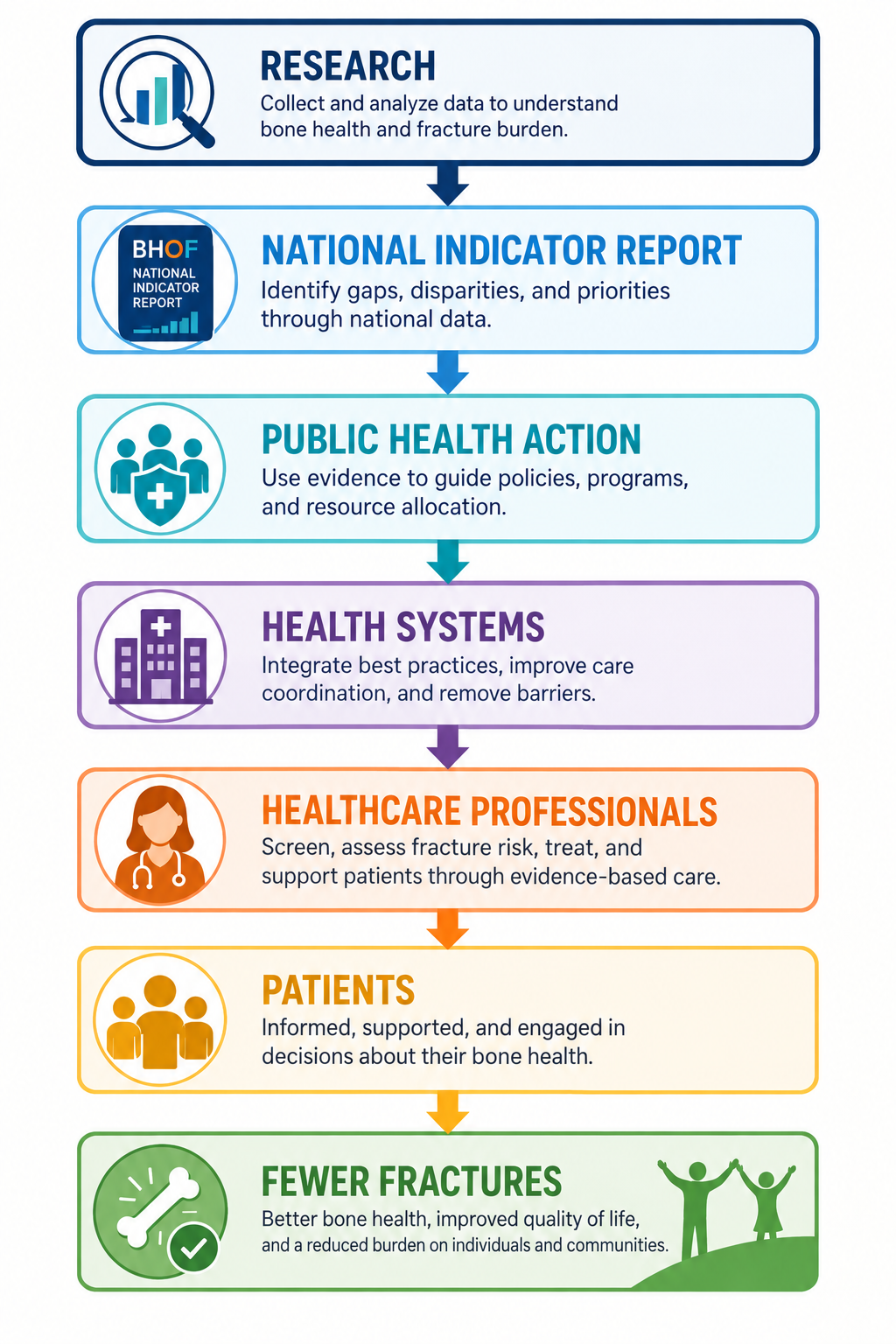
National data can help guide practical action to improve bone health and reduce fractures. Healthcare professionals, health systems, public health agencies, community organizations and policymakers can use these findings to strengthen screening, improve post-fracture care, address disparities and direct resources toward populations and communities with the greatest needs.
Resources for Professionals
Resources for Patients
Looking for reliable information to share with patients? Visit BHOF’s Patient Resource Library.
HOW BHOF IS RESPONDING
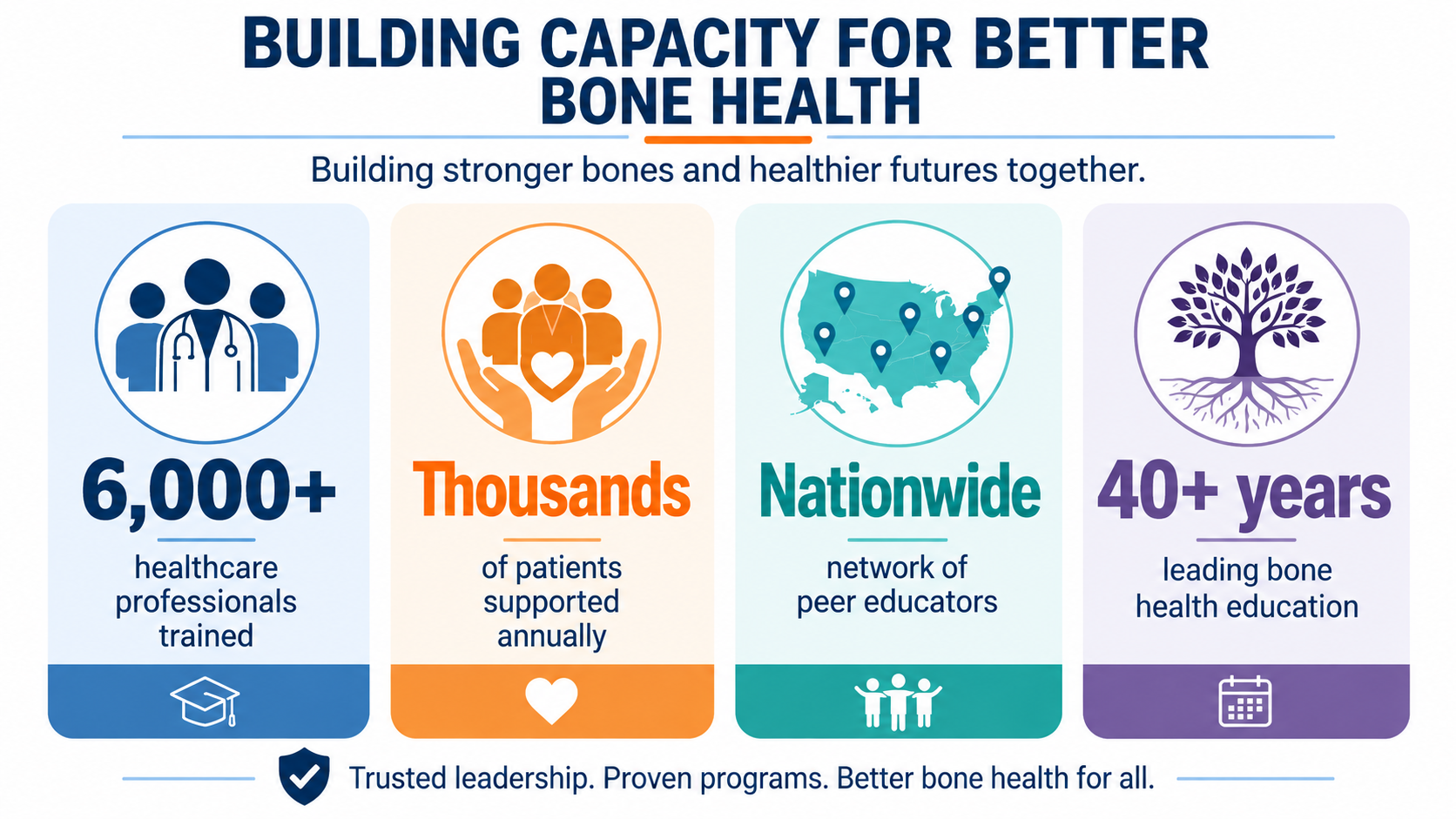
BHOF is working to address the gaps identified in the report through professional education, patient support, public health partnerships, volunteer engagement, and policy advocacy. These programs help expand access to reliable information, strengthen professional knowledge and support better bone health in communities across the country.
BHOF’S NATIONAL REACH
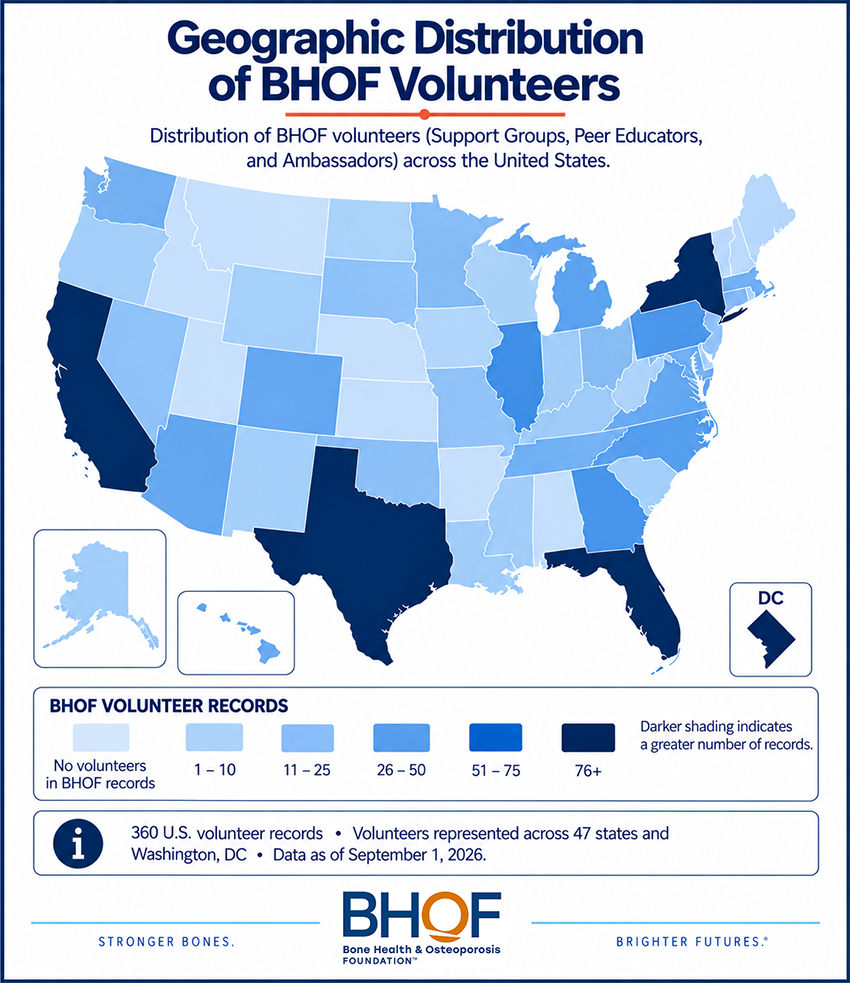
BHOF works with healthcare professionals, volunteers, peer educators, support group leaders, and advocates across the United States. These networks help extend bone health education and resources into communities. This map shows the geographic distribution of BHOF support group leaders, peer educators, and ambassadors included in BHOF’s records as of September 1 1, 2026. It does not measure the availability of bone health services in each location.
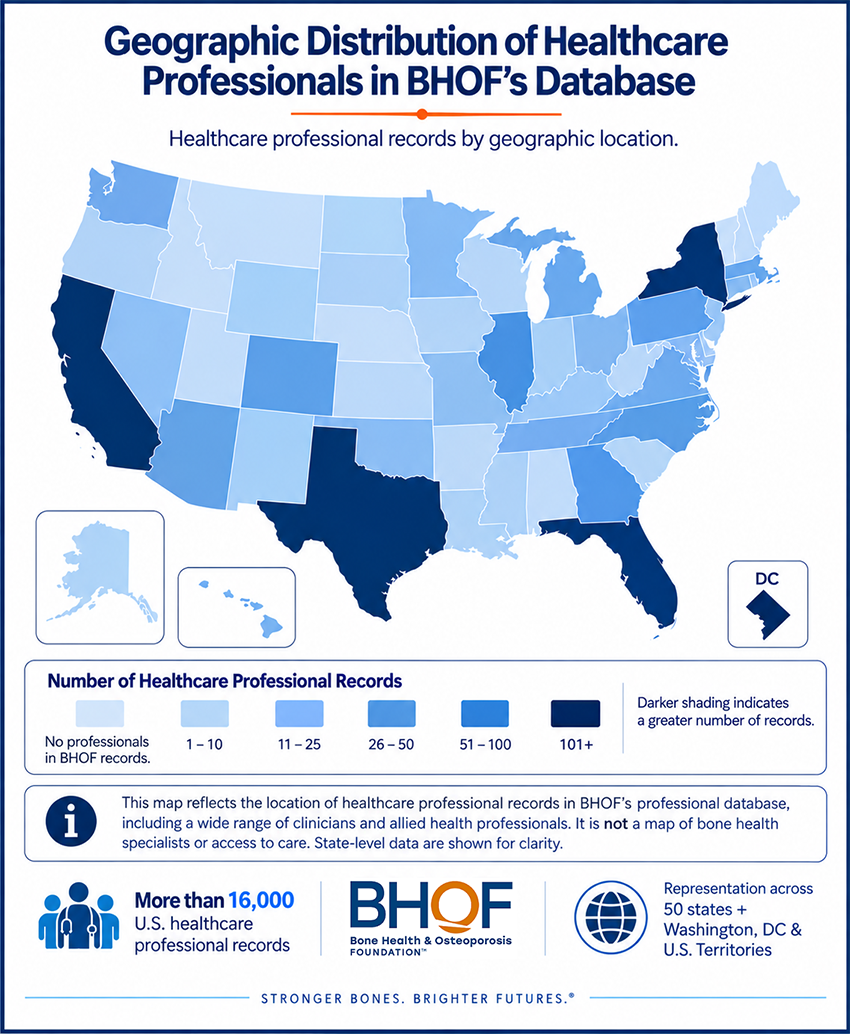
The map below shows the geographic distribution of healthcare professionals included in BHOF’s database as of September 1, 2026. It reflects BHOF’s professional reach and does not measure the number of bone health specialists or access to osteoporosis care in each location.
Join the Movement to Improve America’s Bone Health
The National Indicator Report can help healthcare professionals, health systems, public health leaders, researchers, policymakers and advocates identify priorities and support evidence-based action. By strengthening screening, improving post-fracture care, addressing disparities and expanding access to prevention and treatment, stakeholders can help reduce osteoporotic fractures and improve outcomes for individuals and communities.
The BONEUP project is supported by the Centers for Disease Control and Prevention of the U.S. Department of Health and Human Services (HHS) as part of a financial assistance award totaling $375,000.00 with 100 percent funded by CDC/HHS during year two. The contents are those of the author(s) and do not necessarily represent the official views of, nor an endorsement, by CDC/HHS, or the U.S. Government.